
Ardoq Slack Integration
Ardoq Slack Integration
Project overview
My Role
Product designer, PM, Researcher
Timeline
10 weeks (June-Aug 2022)
Tool used
Figma Miro Jira Confluence
In summer 2022, I led Ardoq’s summer intern project as a product designer/PM. I reported to the design lead and the project owner and collaborated closely with enterprise architects, engineers, and product managers. It was an amazing experience that helped me develop product design thinking, effective communication with engineers and stakeholders, and project management skills.
The project was based on a challenge: Ardoq Slack integration ideas. You might already be puzzled by the topic and are wondering about what it is. I still remember the first day when I was thrown at tons of domain information. The introduction started with a question: “Do you know what graph is?”
As a newbie I was like:
😳😳❓
Background introduction
Let me try to explain the project and the problem in a simple way. (It’s not the easiest domain, I’ll try my best with some illustrations)
It’s an enterprise architecture tool, a SaaS B2B product. Enterprise architecture is the practice of designing and organizing an organization's structure, processes, and information systems to align with its business goals and create a more efficient and effective organization.
Ardoq’s approach to enterprise architecture is to model data in graph.
A graph database is a type of database that stores and manages data in the form of interconnected nodes and edges, such as a social network where nodes represent people and edges represent relationships between those people. In a graph database, the nodes can be a lot more than just people.
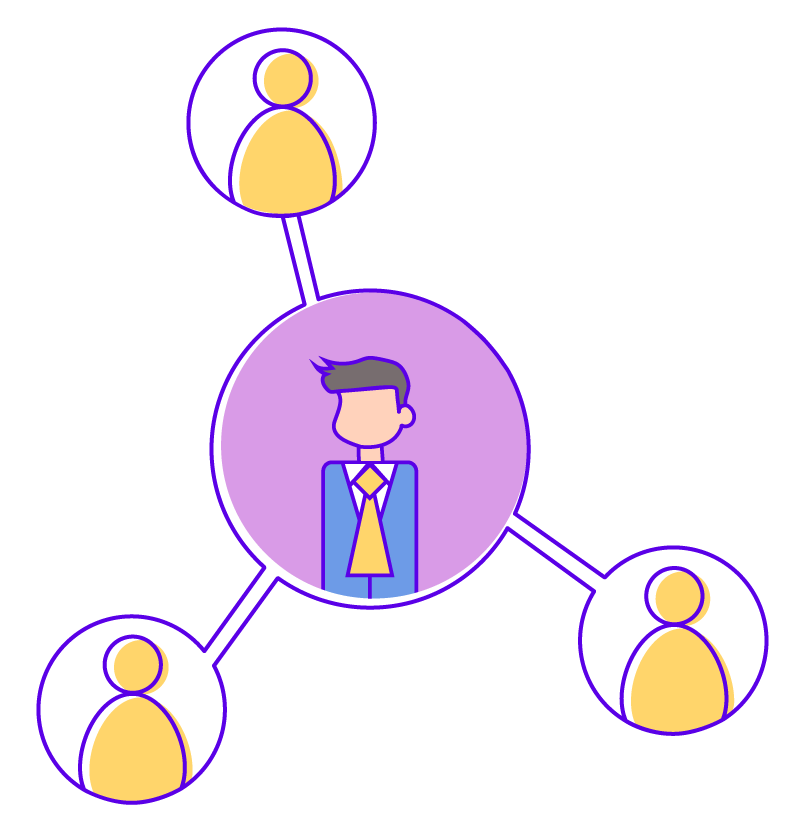
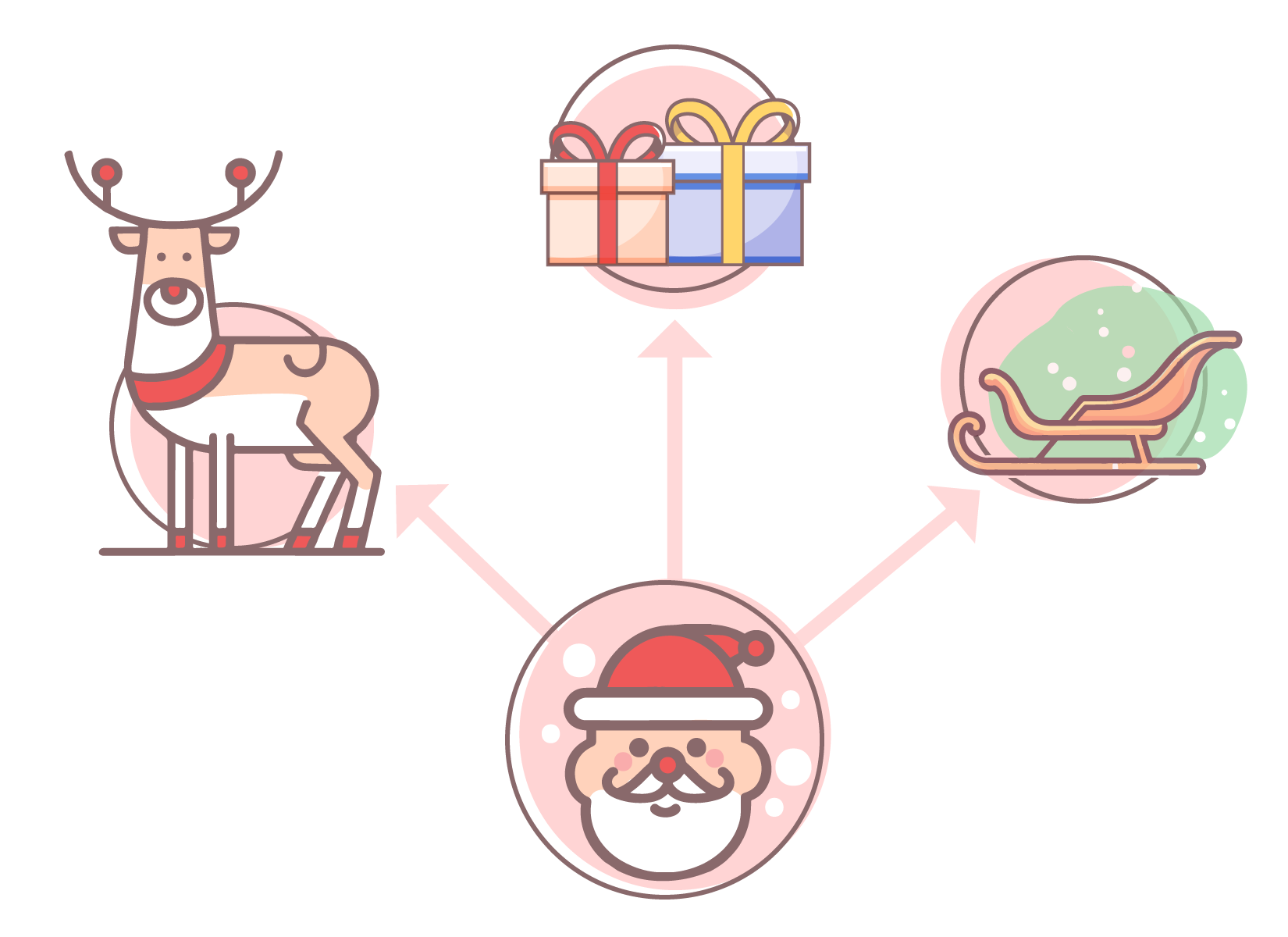
Let me use Santa Claus as an example. Let’s look at Santa Claus’s directed property graph:
Santa owns (8) reindeers
Santa gives away (countless) gifts
Santa rides a sleigh (several times a year)
In Santa’s graph database, he may also have business goals for this year. Objectives and strategies can be modeled and tracked dynamically. Say, Santa has an objective to increase business efficiency, which can be measured by -10% reindeer working hours and +10% gifts delivered, with some extra costs to upgrade the sleigh capacity.
By modeling the overall structure and operation of an organization into graph data, we can understand the organization's (or Santa’s) goals and develop strategies dynamically using Ardoq.

1. What is Ardoq?
2. An example
So, who’s going to model the organization’s data?
Usually, it’s the Enterprise Architect (EA)’s job to gather information and model the data.
Yes, our EA collects information about Santa’s reindeer, gifts dispatched, and rides completed. You might be wondering, is it a bit tiresome for EAs to gather the info and maintain the data all the time? Doesn’t Santa know better about his fleet?
It’ll be more efficient if Santa can maintain the data of his business instead of the EAs - this is made possible with Ardoq’s broadcast and survey function.

3. Enterprise Architect (EA)
Broadcast allows the EAs to send personalized messages to the contributors (such as Santa), and gather insights quickly and at scale. Using Broadcasts, EAs can send out Surveys to collect information from the right audience. Broadcast functions and surveys enable a wider group other than EAs to collaboratively create the enterprise architecture. More importantly, the contributors (those who answer surveys) don’t need to learn how to use Ardoq.
For example, we want to update the number of Santa’s reindeer this year on the system. The EA broadcasts a survey about reindeer numbers to Santa. Upon receiving the survey, Santa fills out the up-to-date info (the reindeer increased from 8 to 10) and results in an automated data update.
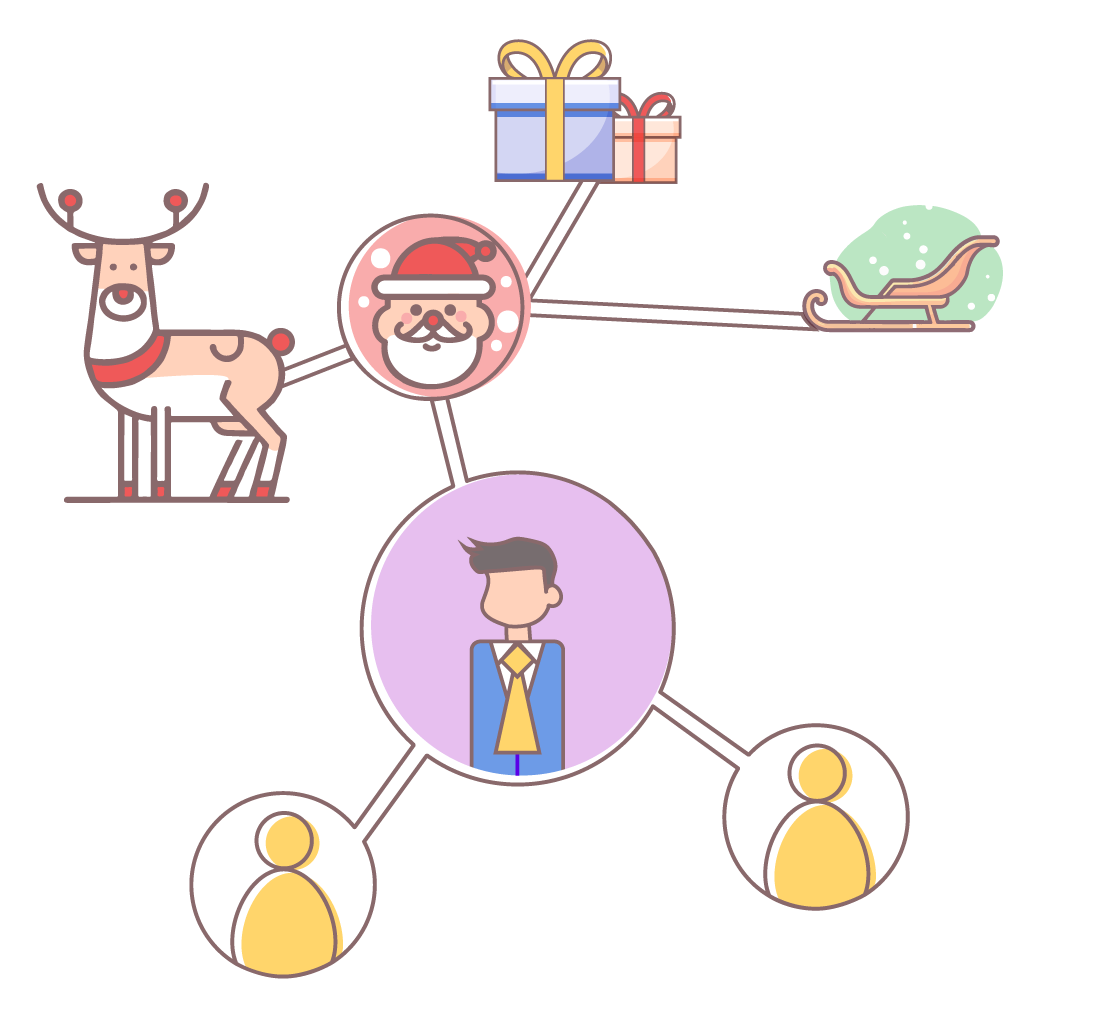
4. Data collection using broadcast and surveys
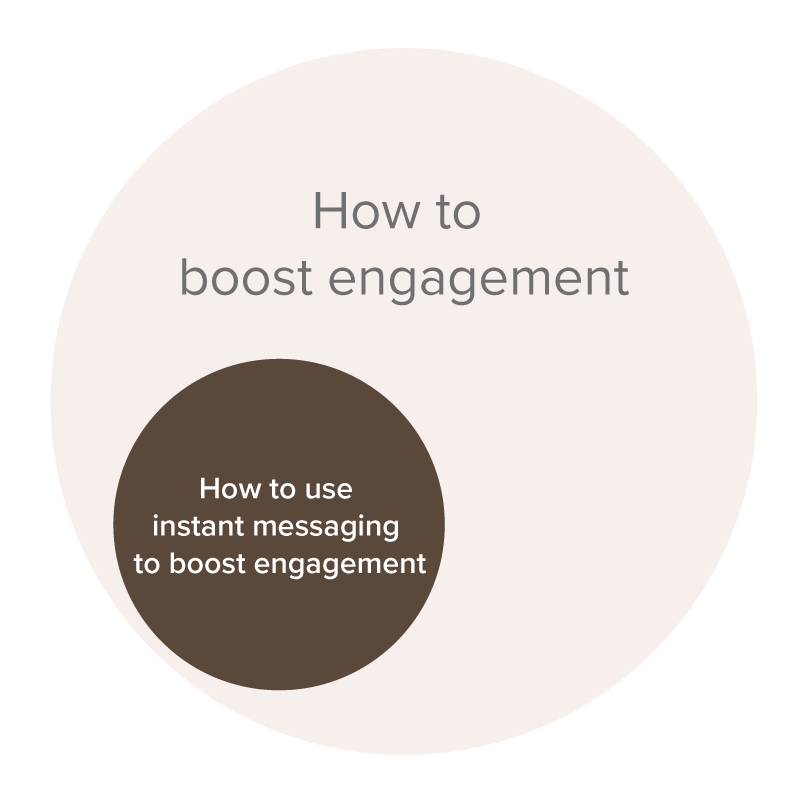
Simply put, this project is to boost user engagement of Ardoq’s survey function. Since it was pre-defined to use slack integration, the scope’s narrowed down to using instant messaging (slack) to boost user engagement.
Using HMW statement, the question can be phrased as:
How might we utilize the power of instant messaging (slack) to boost user engagement?
The Problem
There is one major problem with broadcast function and surveys:
It’s difficult to engage the contributors – they don’t always answer the surveys.
The surveys were distributed via email but have often been ignored.
“Difficult getting engagement with the tool beyond EA.”
-Customer 2
“Surveys have not yet proven useful for engaging others outside of EAs”
-Customer 1


-
It’s difficult for the EAs to engage contributors using survey function
-
How might we utilize the power of instant messaging (slack) to boost User engagement?
User: the EA
There are two types of more specified personas:
(We call both EAs and admin users “EAs” for simplicity’s sake. )
The Users
User and indirect user: the EA and the contributor
We are designing a tool for the EAs to send out surveys to contributors through Slack – the EAs are the main users, while contributors are indirect users.

-
The EAs have their main job responsibilities on the enterprise architecture, they are responsible for modeling and maintaining the overall structure and operation of an organization using Ardoq.
When enterprises purchase Ardoq’s service, they will need to have a dedicated EA role to do the job and use the product.
-
There are others who also have admin rights to use Ardoq. They are professionals in different areas, such as Cyber Security, Compliance, and Product Ops. They may need to use broadcasts and surveys to collect data from the general audience in different departments.
We call both EAs and admin users “EAs” for simplicity’s sake.
Indirect user: the contributor
The indirect users – contributors, who receive and complete the surveys, are also important. The contributors are not directly using the product but receive the system output produced.
We are designing a tool for the EAs to send out surveys to contributors through Slack – the EAs are the main users, while contributors are indirect users. The EAs will use and benefit from using the product. The contributors will receive surveys on Slack – they could be stakeholders or general audiences who contribute to collaborative data collection.

Research
Understanding the users and their problems
As the researcher of the project, I was onboarded one week earlier than the rest of the team. The first week’s main task for me was to understand the product and the user. I did a series of interviews with the enterprise architects and other stakeholders to collect their pain points.
Based on interviewing 2 enterprise architects, 1 power user (who has admin rights), and 1 customer experience manager, the following are the challenges faced.
1. It’s difficult to collect data from surveys using generic emails. The emails are not prioritized or read in time by the indirect users. As a result, it takes a long time to collect survey results, sometimes they don’t answer at all.
I discovered a unique phenomenon in this organization: many indirect users don’t read emails.
This is a huge difference between traditional enterprises and start-ups: while many companies prioritize emails, some start-ups may embrace a “slack first” culture. It varies greatly from one to another. (remember, what works in this organization doesn’t apply to every company!)
2. Sometimes the recipients of surveys are not the ideal respondents. When the recipients don’t have the right knowledge to complete the surveys, the workflow went to a dead end.
With the current broadcast targeting function, EAs can route surveys to the right recipients. Still, the recipients are not 100% correct or ideal. For example, a project owner can be changed to another person. However, the targeting rules were static and can only be changed manually.
3, The capacity of the EAs limits the efficiency of data collection, as all information collection and survey distribution must be done through the EA team.
Ideally, stakeholders should be able to collect the info by themselves without the EA team. This can be achieved by giving rights to more contributors to broadcast and send out pre-existing surveys by themselves.
4, Indirect users don’t have an overview of surveys that are assigned to them. They only receive systematic emails with survey links and it’s hard to keep track of the survey status.
Want to know more?
*This project is under an N.D.A so only limited content can be shared here.